Three Small Business Insurance Commercial: A Comprehensive Guide to Protecting Your Ventures

Let’s face it: running a small business is no small feat. Amidst the hustle of managing operations and nurturing growth, there’s one crucial aspect that often slips through the cracks—insurance. Without the right coverage, your business could be one unexpected event away from financial ruin.
In this guide, we’re diving deep into the world of small business insurance. Whether it’s safeguarding your commercial property, protecting against liability claims, or ensuring workplace safety through workers’ compensation, understanding these insurance essentials is key to securing your business’s future. Let’s explore how the right insurance can be your business’s best ally.
Understanding the Basics of Small Business Insurance
Did you know that 40% of small businesses never reopen after a disaster? That’s why having the right insurance is crucial. It can mean the difference between closing your doors and thriving post-crisis.
Small business insurance is your safety net. It guards against unexpected events that could financially cripple your business. From property damage to legal liabilities, insurance protects your hard work and investment.
The Importance of Having Insurance for Small Businesses
Running a business is a risky venture, even on a good day. You never know when a customer might slip and fall or when a natural disaster might strike. Without insurance, these unexpected events could cost you dearly.
Insurance is not just a financial buffer. It’s a commitment to your business’s longevity. By investing in the right policies, you ensure that your company can weather any storm.
Overview of Common Types of Small Business Insurance
Here is the deal: there are several types of insurance policies that small businesses typically need. Let’s break them down:
- General Liability Insurance: Covers accidents, injuries, and negligence claims.
- Property Insurance: Protects your property and inventory from damage or theft.
- Workers’ Compensation Insurance: Provides medical benefits and wage replacement for injured employees.
- Professional Liability Insurance: Also known as Errors and Omissions (E&O) insurance, it covers negligent professional services or advice.
Risks of Not Having Proper Insurance Coverage
Think you’re invincible without insurance? Think again. Nearly 75% of small businesses are underinsured, leaving them vulnerable to substantial losses.
Pro Tip: Investing in insurance is much cheaper than paying out-of-pocket for unexpected damages or lawsuits.
Without adequate coverage, a single lawsuit or natural disaster could drain your resources, forcing you to shut down. Don’t let lack of insurance coverage be the Achilles’ heel of your business.
Key Components of a Small Business Insurance Policy
Think you know what goes into a small business insurance policy? Think again.
Understanding the complexities of a small business insurance policy can be daunting. But once you break it down, it’s a lot more manageable. Let’s dive into the main components that typically make up these policies, so you can make an informed decision for your business.
Main Components of Small Business Insurance
Small business insurance policies usually include a few essential components. First, there’s General Liability Insurance. This covers claims related to bodily injury, property damage, and advertising injury. Then you have Property Insurance, which protects your business assets like equipment and inventory. Worker’s Compensation Insurance is also crucial if you have employees, as it covers medical expenses and lost wages if they’re injured on the job.
Another component you might consider is Professional Liability Insurance, also known as Errors and Omissions Insurance. It’s vital for services-based businesses to shield against claims of negligence or mistakes. Finally, there’s Business Interruption Insurance. This kicks in if your business operations are halted due to events like natural disasters.
Factors Influencing Insurance Cost and Coverage
Here is the deal: not all policies are created equal. The cost of your small business insurance can be influenced by several variables. Industry plays a huge role; high-risk industries like construction may pay more. The size and location of your business matter too. More employees and a prime location can mean higher premiums.
Don’t forget about your claims history. A history of frequent claims can increase your costs significantly. The specific coverage limits and deductibles you choose will also impact your premium. It’s critical to weigh these factors to find the right balance of coverage and cost for your business.
Pro Tip: Always review your policy annually. Business needs change and your coverage should too!
Comparison of Insurance Types
To give you a clearer picture, here’s a breakdown of various insurance types, their benefits, risks, and cost factors:
| Insurance Type | Coverage Benefits | Potential Risks | Cost Factors |
|---|---|---|---|
| General Liability | Covers bodily injury, property damage | Claims from customers, lawsuits | Business size, claims history |
| Property Insurance | Protects business assets | Natural disasters, theft | Location, type of property |
| Worker’s Compensation | Covers employee injuries | Workplace accidents | Number of employees, industry risk |
| Professional Liability | Protects against negligence claims | Mistakes, service errors | Business type, coverage limits |
| Business Interruption | Covers income loss during disruptions | Natural disasters, unforeseen events | Business revenue, location risk |
Selecting the Right Insurance for Your Small Business
Did you know that 40% of small businesses have no insurance? Crazy, right? If you’re a small business owner, choosing the right insurance can be a *make-or-break* decision.
But how do you select the right policy? The process can feel overwhelming. Here is the deal: with a methodical approach, you can safeguard your business without breaking the bank.
Methods to Determine the Appropriate Insurance for Various Business Types
First up, you need to identify your business risks. Are you a consultant worried about client lawsuits? Or maybe you’re a retailer concerned about theft and damages. Different businesses have different needs.
Let’s keep it simple: categorize your business risks into physical, liability, and income-related. This makes it easier to match risks with insurance types. Once you know your risks, you can choose from options like general liability, professional liability, or property insurance.
Pro Tip: Consult an industry-specific insurance advisor who understands your niche.
Strategies for Evaluating Insurance Providers and Policies
Now that you know what you need, let’s talk about who can provide it. Not all insurance providers are created equal. So how do you separate the good from the bad?
Here is where you need to evaluate their reputation. Check online reviews and ratings. Talk to fellow business owners. And don’t just look at cost; consider the customer service and claim process too.
Finally, compare the fine print. What’s covered, what’s not, and under what conditions? This could be the difference between a smooth claim and a bureaucratic nightmare.
Checklist for Business Owners When Selecting Insurance
Before you seal the deal, run through this checklist. It’s crucial for making an informed decision:
- Identify business risks
- Research needed insurance types
- Evaluate insurance providers
- Check policy inclusions and exclusions
- Compare quotes from multiple providers
- Read and understand the terms thoroughly
- Seek advice from industry experts
Stick to this checklist, and you’ll have a well-protected business in no time.
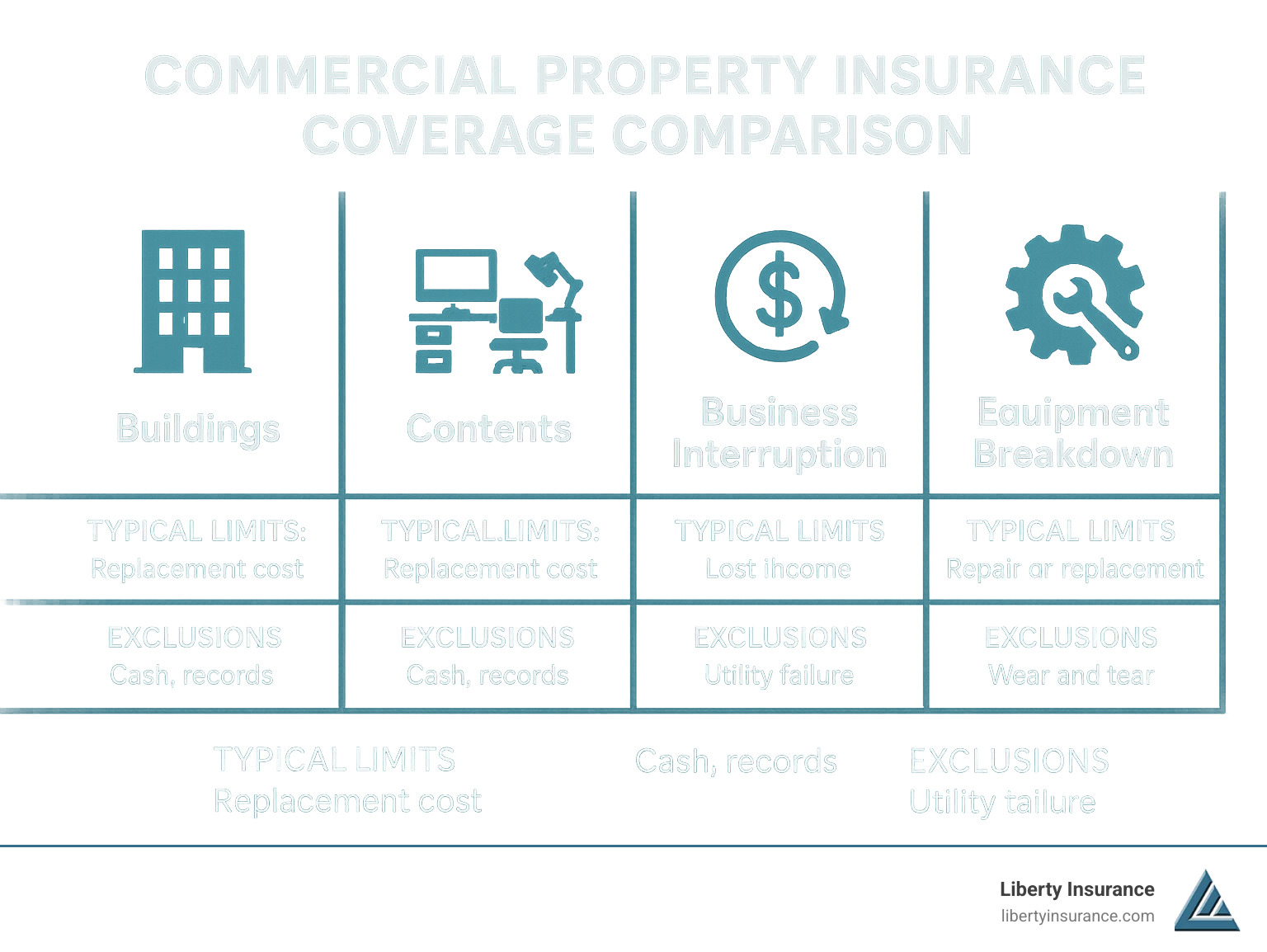
Commercial Property Insurance
Did you know that 40% of small businesses never reopen after a disaster? That’s where commercial property insurance steps in. It’s your shield against unexpected calamities that could wipe out your business assets.
At its core, commercial property insurance protects the physical assets of your business. We’re talking about your building, equipment, inventory, and more. But here is the deal: It’s not just about protection. It’s about survival and continuity in the face of unforeseen events.
Benefits and Limitations of Commercial Property Insurance
When you buy commercial property insurance, you get a safety net. It covers things like fire damage, theft, and certain natural disasters. This means you can replace or repair damaged assets without draining your bank account. But, here’s a catch: most policies don’t cover floods and earthquakes. You might need additional coverage for that.
| Benefits | Limitations |
|---|---|
| Protects physical assets like buildings and inventory. | Doesn’t usually cover flood or earthquake damage. |
| Helps maintain business continuity after a loss. | May have high deductibles and premiums. |
| Can cover loss from theft and vandalism. | Does not cover wear and tear or intentional damage. |
How Commercial Property Insurance Mitigates Financial Loss
Imagine a scenario: a fire breaks out in your office, destroying everything. With commercial property insurance, you don’t have to worry about coming up with thousands of dollars for repairs. Instead, your insurance company steps in to cover the costs, saving you from potential financial ruin.
Pro Tip: Always read your policy carefully to know what’s covered and what’s not. Consider adding riders for specific risks unique to your location or industry.
Remember, the goal is to keep your business running no matter what. And with the right commercial property insurance, you’re one step closer to that security.
Liability Insurance

Did you know that 4 out of 10 small businesses are likely to experience a liability claim in the next 10 years? That’s a staggering statistic. Liability insurance is your lifeline against these potential legal battles.
For small businesses, liability insurance serves as a shield, protecting you from unforeseen legal claims and hefty financial losses. Whether it’s a slip-and-fall accident or an alleged professional error, without proper coverage, you could be facing a financial nightmare.
General Liability vs. Professional Liability
Here’s the deal: not all liability insurance is created equal. General Liability Insurance covers physical risks—like property damage and bodily injury—while Professional Liability Insurance (often called Errors & Omissions) protects against claims of negligence or insufficient work.
It’s crucial to understand which type suits your business because the risks vary significantly between industries. General liability is often more suited for brick-and-mortar businesses, whereas professional liability is a must for service-based professions.
Types of Liability Insurance, Coverage Scope, and Claim Scenarios
Choosing the right liability insurance can feel overwhelming. But breaking it down into categories simplifies the process:
| Type of Liability Insurance | Coverage Scope | Typical Claim Scenarios |
|---|---|---|
| General Liability | Covers bodily injury, property damage, and advertising injury | Customer slips in your store, damaging their property |
| Professional Liability | Protects against negligence, errors, and omissions | A client claims your advice led to financial loss |
| Product Liability | Covers injury or damage from products sold | A defective product causes injury to a customer |
Pro Tip: Always read the fine print of your policy to ensure comprehensive coverage for your specific business needs.
Workers’ Compensation Insurance
Think workers’ comp is just for big companies? Think again. Without it, even a small slip or fall could cost your small business big time.
Workers’ compensation insurance is not just a legal requirement; it’s a lifeline for your business and employees. It covers medical expenses, lost wages, and rehabilitation costs if your employees get injured on the job. And that means peace of mind for you and your team.
Benefits of Workers’ Compensation for Employees
When it comes to protecting your employees, workers’ comp insurance is a game-changer. It provides medical coverage for workplace injuries and illnesses, which can save your employees from financial ruin. Plus, it ensures they receive partial wage replacement while they’re recovering and unable to work.
Here’s the deal: by offering these benefits, you’re not just complying with the law—you’re showing your team that you genuinely care about their well-being.
Real-Life Scenarios Where Workers’ Compensation Applies
Imagine this: one of your employees strains their back while lifting heavy boxes. Or another slips on a wet floor in the break room. Workers’ compensation covers both scenarios. In fact, it’s applicable whether the injury is caused by a single event or develops over time due to repetitive motion.
Pro Tip: Regular safety training can reduce the number of workers’ compensation claims, saving you money in the long run.
Bottom line: workers’ compensation is essential for protecting both your employees and your business from unforeseen accidents and liabilities.
Final Thoughts
In the fast-paced world of entrepreneurship, having the right insurance is like having a safety net. It keeps your business resilient against the unforeseen and ensures that you’re not just surviving but thriving. As you navigate the complexities of running a business, remember that the right insurance policy could be the difference between weathering a storm and facing a financial disaster. Make informed choices, protect your assets, and pave the way for sustained success.
Common Queries
What are the three main types of small business insurance?
Common types include commercial property insurance, liability insurance, and workers’ compensation insurance, each addressing different aspects of business protection.
Why is commercial property insurance important?
It protects your business assets, such as buildings and equipment, from risks like fire, theft, and natural disasters, thereby safeguarding your investment.
How does liability insurance protect my business?
Liability insurance shields your business from legal claims and lawsuits, covering expenses related to bodily injuries, property damage, and legal defense costs.
What does workers’ compensation insurance cover?
It provides medical and wage benefits to employees injured on the job, ensuring compliance with legal requirements and fostering a safe work environment.
How can I choose the right insurance provider for my business?
Evaluate providers based on their reputation, policy options, customer service, and pricing. It’s crucial to select a provider that aligns with your business needs and offers reliable support.